Woven Mythology: The Stories and Symbolism Behind Traditional Saree Motifs
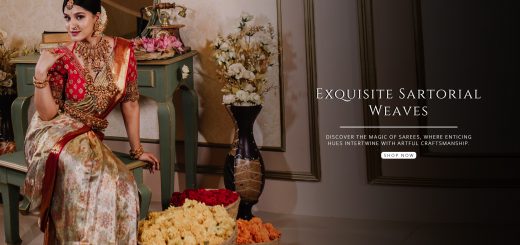
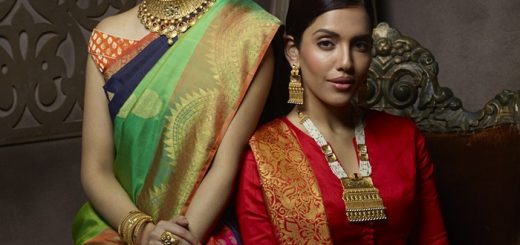
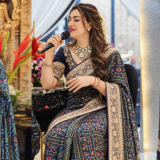
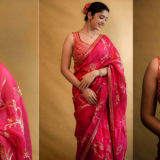
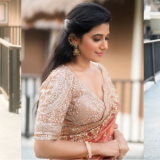
A saree is so much more than just a beautiful piece of textile. When you look a little closer at the saree, you will find that its pallu, body and border have been enmeshed with a visual language that derives its meaning from nature, mythology, arts, architecture and centuries of crafts. A peacock signifies beauty and festivity, the lotus evokes purity and transformation, the paisley represents the shape of the mango and the borders inspired by temples connect architecture and clothing. These details make traditional Indian sarees interesting not only because of their beauty but also because of the stories they conceal. All over India, we understand the significance of different designs and meanings of motifs used in sarees. The patterns used are reflections of our culture and tradition.
Why Traditional Saree Motifs Matter
The handicraft of handloom in India is somewhat rich due to the different traditional forms that it has like Paithani, Banarasi, Kanchipuram, Jamdani, Baluchari, Chanderi, Maheshwari, Pochampally and so on. The Indian government has recognized many regional saree forms for the uniqueness in both their nature of weave and designs involved. Over time, weavers have relied on nature as a source of inspiration. Some of the common inspirations for designs would include birds, trees, flowers, different forms of animals, temples and geometrical forms. However, the beauty of the designs resides in the fact that the motifs used need not just be the designs on the surface of the woven fabric. It should be noted that the various types of weaving traditions would make use of multiple techniques like, extra-weft weaving, tapestry weaving, brocade and so on.


The Peacock: Beauty Woven Into Tradition
The peacock is one of the most well-known symbols in Indian textiles. Its colorful feathers and elegant shape have inspired artists and weavers alike for generations. According to the Development Handlooms, peacocks can be found in many different Indian art forms such as monuments, paintings, and textiles. They are associated with beauty, love, and relationships, although their meaning has changed over time. Peacocks are especially important in the world of Paithani weaving. Traditional Paithani sarees, made using intricate designs and colorful borders, include depictions of peacocks along with many different designs. The design called bangadi mor, or bangle peacock, teaches us that nature can be transformed into an intricate geometric creation by the weaver.


The Lotus: A Flower With a Deeper Story
In Indian religious art, sculpture, painting and decoration, the lotus flower has played a significant role due to its feature that enables it to rise above water and blossom. You can find the lotus flower in sarees in the form of border motifs, repeats or a part of flower patterns. The fact that the lotus has perfectly symmetrical petals makes it easier to weave. In terms of iconography, those involved in textile design associate the lotus flower with Lakshmi as well. Therefore, using its motifs for celebrating some occasions is common in Indian textiles. Nevertheless, keep in mind that the lotus is not just one symbol, but the tradition of using this motif is interconnected with the cultural specificity of the Indian people. In case you use the motif of the lotus flower many times in one saree, it creates a rhythm. The large patterns with the picture of the lotus flower on the pallu would be the most attractive.


The Paisley: From Mango to Global Motif
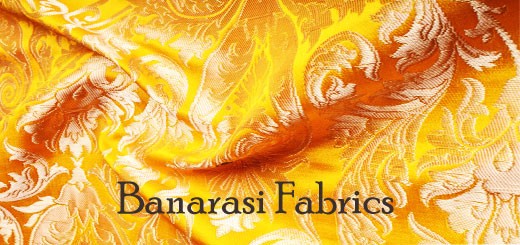
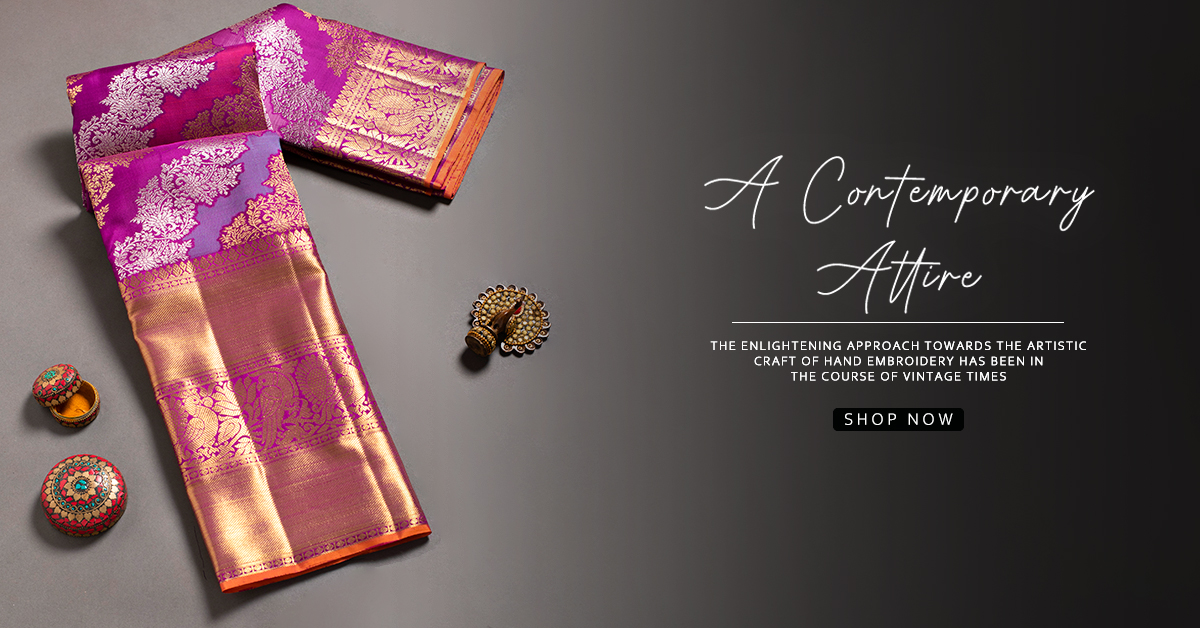
Few motifs have circulated as well as paisley in textile traditions. In India, the term kairi or ambi can be found, referring to the shape’s resemblance to mango. The paisley shape is one of the components of the Indian textile tradition, appearing in silk sarees, shawls, brocades, prints, and needlework. In Banarasi textile, paisley figures are surrounding by complicated floral and foliage designs. The Banarasi brocade is famous for its elaborate floral and foliage designs, using the forms such as kalga and bel, as well as jali and meena works. The example of paisley shows how a motif evolves. It starts as a recognizable natural shape and develops into a highly stylized one, thus integrating well into complex woven compositions.


The Elephant: Majesty on the Loom
The elephant’s strong visual appeal makes it an obvious choice for ceremonial fabrics. Its depiction in Indian art is associated with strength, power, royalty and good fortune. The image of the elephant in fabric may take on very tiny, repeated designs in borders or huge patterns on the body. The distinctive visual quality of the element lends the fabric a royal quality. The idea also proves the ability of textile artists to present complex three-dimensional shapes with a few carefully drawn lines. Elephants and other animals and birds usually appear among floral motives, creating a unique natural space in the saree.


Temple Motifs: Architecture Becomes Textile
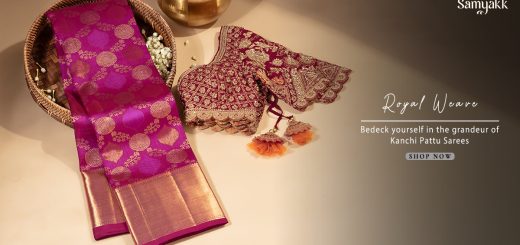
The influence of the temples of India can be seen on the saree design as well as on many elements of visual arts. Perhaps one of the best examples of this influence can be found in the temple pattern-border of the Kanchipuram silk saree, which is connected to the triangle-like shapes of temple gopurams that are placed alongside the saree border in a rhythmic way, thus transforming architectural patterns into a textile design. These orders work especially well for weddings and religious ceremonies, as they connect the saree with the architectural and devotional traditions of the country visually.


Parrots and Floral Vines: Nature With Personality
The parrot is another The parrot is a favorite design in Indian textiles, mainly in some South Indian and Maharashtrian textile practices. The motif of the parrot and the peacock is found together along with flowers and many other decoration designs in the Paithani work. The parrot adds change in the textile designs. The shape of the bird with its curved figure and various forms stands in sharp contrast with the geometrical ornaments and flower patterns. Flowers symbolize nature that is continuously changing. There are cases in which one flower blooms in sequence with the other blooms by using the technique of the first flower is transformed into the second one that follows in a given structure.


Floral Jaal: Creating a Garden in Silk
Floral jaal designs are yet another timeless feature of Indian textiles. The term “jaal” implies a net-like or connected formation allowing flowers, leaves and stems to permeate the fabric. Banarasi textiles, for instance, are known for their complex floral and foliate designs. The official accounts of Banaras brocades stress their intricate floral and foliate designs alongside the characteristics of jali and meena work. A floral jaal design can give you a completely different effect as opposed to a saree with a single big pattern. While the latter will make your eye focus on one element of design, a floral jaal will allow your eye to dive into the richly decorated surface.


Motifs Are Regional Signatures
Indian sarees are known for their interesting characteristic, which is that different regions create different variations of the same design. A peacock in a paithani saree might look entirely different compared to a peacock in a Banarasi saree. Just like the flower motifs display the brocade language of Varanasi. Also, the temple border in a Kanchipuram saree depict South Indian architecture and the Baluchari saree has a pallu depicting the mythology using figurative motifs. For these reasons, it is a mistake to consider Traditional saree motifs as a single visual language. These saree designs come from different places and are influenced by the area’s history, geography, forms of art, and weaving styles.


Why These Motifs Still Matter Today
The traditional motifs continue to persist as they have the ability to adapt. Present-day designers can magnify a peacock, simplify temple borders or create new interpretations of paisley while combining modern shades with traditional motifs. The basic visual vocabulary retains its recognition while the sarees look renewed. This transformation is crucial because heritage means more than just reproducing something in its original form. Handloom traditions stay alive through the continuing creativity of artisans and designers. For the saree wearers today, knowing the meanings of these motifs makes the saree choice much more enjoyable, be it a peacock design because of its elegance, a lotus design because of the notion of purity or various kinds of temple borders due to their architectural meaning.


The Saree as a Woven Memory
What is truly amazing is the fact that the traditions of saree are not kept only in the museums. There are many elements of its narrative that have gone through centuries. On the one hand, the craftsperson has physicalized his/her traditions by means of craftsmanship, while the saree wearer has interpreted them anew. This is the reason why saree can appear both ancient and modern. A peacock, for example, could have existed ages ago in Indian art, but who is stopping it from becoming the main motif of a bride’s sari nowadays? The temple ornament may have its roots in the ancient architecture, but this won’t prevent it from fitting impeccably into a modern blouse. A floral pattern might use the visual means of traditional Banarasi weaving, and still look contemporary. But in the end, all the motifs have their story not only in terms of what each image means, but also what story they have in general.


Frequently Asked Questions (FAQs)
What are the most common motifs found in traditional Indian sarees?
There are recurring motifs, such as peacocks, paisleys, lotuses, parrots, elephants, floral vines, leaves, geometric patterns, and temple-like patterns. Different materials and techniques give a different aspect and meaning to this art piece.
Do saree motifs always have a specific symbolic meaning?
Not really! Some motifs have strong cultural or religious meanings while others are purely decorative and regional. Their meanings are also subject to change depending on cultures and textile traditions. Hence, it is better to place them in their own cultural context to get them better.
Also Read:-
How to Store and Care for Expensive Pure Silk Sarees: 7 Mistakes to Avoid