The Hidden Spiritual Meanings Behind Iconic Banarasi Saree Motifs
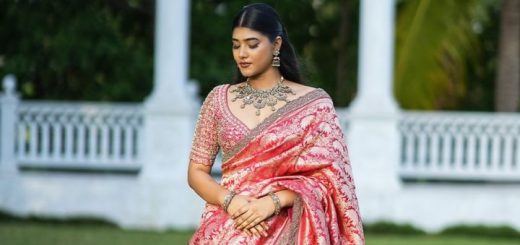
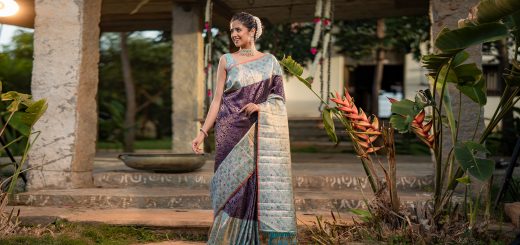
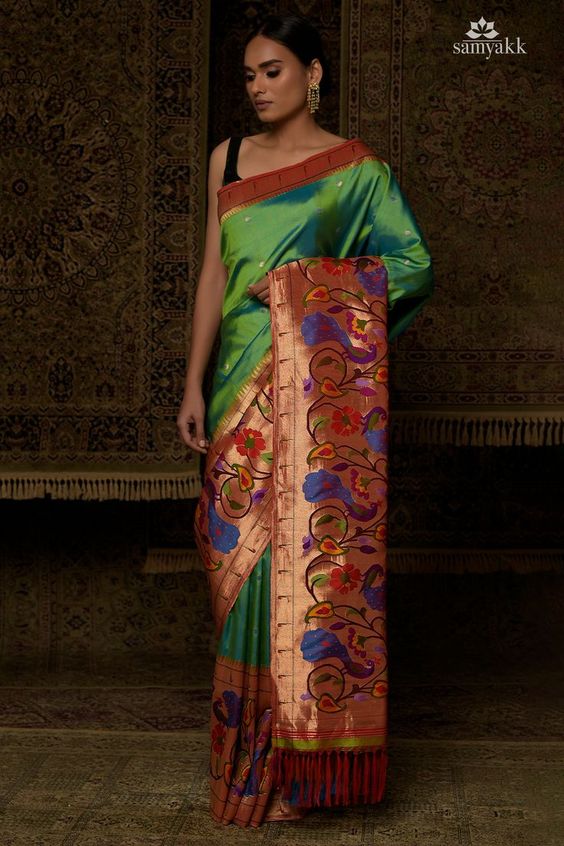
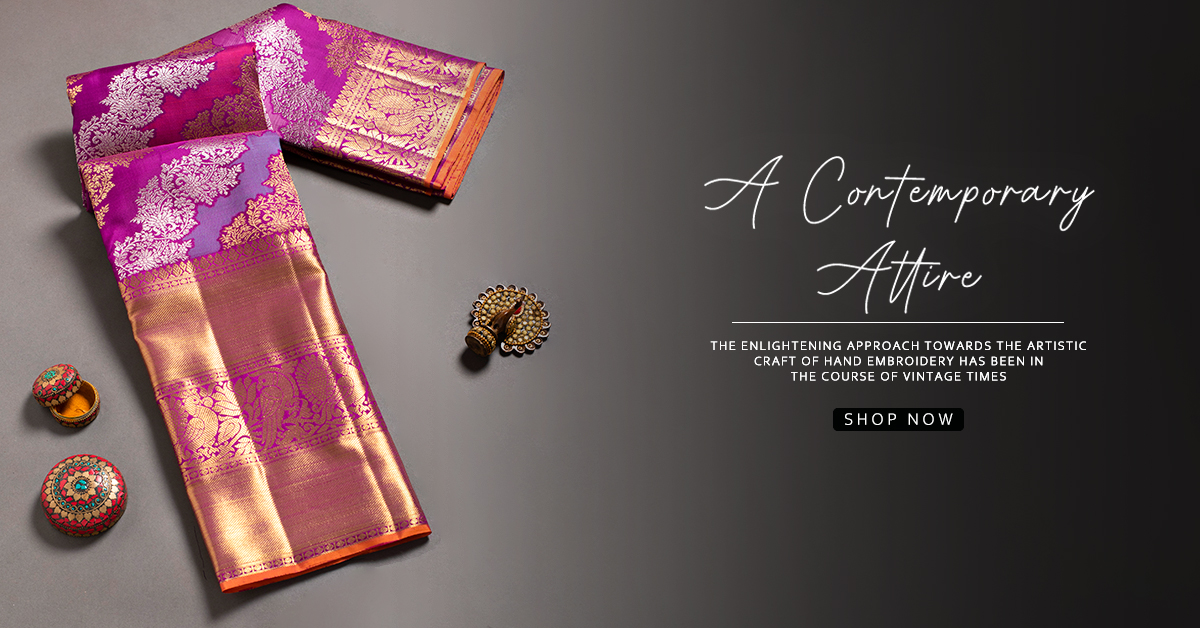
A saree appears stunningly beautiful from afar but a Banarasi Saree becomes even more interesting when viewed closely, as it reveals the weaving patterns. This special saree features many embellishments and decorative elements that do not only serve the decorative purposes. They also represent the centuries-long traditions of art, rich folklore and the art of crafting connected to Banaras. Banarasi brocade and sarees are considered as GI product of Uttar Pradesh and they have certain peculiarities mentioned in government records on crafts of India. They include the presence of silk threads, zari, floral motifs, as well as different types of weaving such as kalga, bel, jaal, and meenakari. That is why knowing the meaning of Banarasi saree motifs can become a very intimate activity.

Why Do Banarasi Saree Motifs Matter?
Banarasi saree designs are creations from fusion of traditional workmanship and various influences from surrounding cultures which reached Banaras over the years through the process of cultural interchange. According to the representatives of the Government, floral patterns typical for Mughal designs such as kalga, bel, etc. are the crucial manner of the Banaras brocades. Motif is represented as a repeated pattern in production of textiles. In terms of Banarasi textiles, that can be either separately included in the fabric or form one large floral ornament or be an important detail of a border or pallu. Meaning of a motif can be defined too as according to its context. For instance, paisley can be understood merely as a traditional motif at some times, while at others it can bring thoughts of fertility and plenty due to its shape looking like that of mango. Henceforth, the upcoming implications referring to spirituality are to be taken as cultural meanings instead of fixed definitions given to every Banarasi saree.

1. Kalga or Paisley: A Symbol of Life and Continuity
One of the key design elements in Banarasi weaving is the kalga. The kalga is a shape similar to a teardrop or paisley. According to the documentation of handicrafts by the Government of India, the kalga can be found among the different floral and leaf patterns that are quite characteristic of the brocade textiles from Banaras, especially those influenced by Mughal traditions. There is an interesting story of its cultural transmission. Contemporary references describe the shape as having its roots in Persian design and that it made its way to become part of the Indian textile heritage. The Indian kalga resembles a mango and it is considered a traditional symbol of fertility, prosperity, and life.


2. Bel: The Flow of Life
Bel is a motif that depicts a creeping or climbing plant, often seen adorning sarees and draping over borders, pallus and the body of a saree in graceful floral patterns. It’s a key visual motif since, unlike an isolated emblem, bel creates linkages between various floral motifs. Modern Banarasi practitioners see this linking process as a representation of life-giving motion. Historically, bel is part of the Persian flower vocabulary associated with Banaras brocade and the GI documents published by the Government of India consider bel along with kalga to be a hallmark of Mughal aesthetics in the context of Banaras brocade designs. In spiritual terms, the bel can be viewed as a symbol of continuity. The twisting form of the plant indicates that growth does not occur in a straight line but rather grows, branches out, and connects.

3. Buti and Buta: Beauty in Every Detail
The concepts of buti and buta relates to the different decorative designs incorporated in a saree fabric. A buti typically refers to a smaller repeated design, whereas a buta design involves larger designs. The symbolism here does not necessarily involve explaining of a certain common spiritual meaning but talks more about abundance due to repetition. For example, if you observe a single flower design used in a saree, it could appear unimportant. However, if you take into consideration hundreds of small flower motifs on silk fabric, their impact on the viewer will be totally different. The repetition of motifs may be viewed as a symbol of beauty of the small things and that great things may emerge from many separate pieces of designs, sequenced on the fabric. The ashrafi buti design looks like a coin and is normally connected with wealth and prosperity in modern Banarasi traditions.

4. Jaal: The Beauty of Connection
Jaal translates into English as a net. Jaal represents a design that is complex enough to be compared to a net consisting of multiple elements inside it. While isolated butti will be one element, jaal will include many motifs becoming one whole pattern. References to the processes of Banarasi weaving state that designs have flowers and their vining elements connected and intertwined together, and governmental documents on craft refer to jali that is defined as having a pattern that looks like a net and is typical of the textiles produced in Banaras. Interconnectedness adds to the significance of jaal in the spiritual sense. The jaal pattern signifies harmony, interrelatedness, and connection. It draws one’s attention to the system as a whole instead of focusing on the particular flower. This way, jaal acts as a perfect symbol of relations as well as community and shows how particular components are only valuable when they are combined.

5. Lotus: Purity and Spiritual Awakening
Lotus is one of the most recognized holy flower symbols of India, which is present in many art forms and textile traditions of the country. Its significance comes from the specificity of growing. Rooted in muddy waters, the lotus rises to the water surface and blossoms beautifully. This characteristic has turned it into an important symbol of purity, awakening, and transcendence in the cultures of Hinduism and Buddhism. When lotus motifs appear in the way of designing the saree, they imply a more meaningful cultural dimension of the saree. Such design is especially appropriate for ceremonial occasions that symbolize such things as new beginnings, blessings, and celebrations. The use of the lotus in zari on silk is not only a way of embellishing the saree but is also the way of expressing a very important message: the art of rising above the challenges and sorrows of life while remaining noble and beautiful. Moreover, it is critical to make a distinction between the general spiritual symbolism of lotus in India and the assumption that every lotus pattern on the saree has a very specific meaning.

6. Peacock: Beauty, Grace and Divine Associations
In the visual culture of India, the peacock is a symbol of beauty, elegance and richness along with which, it relates to some gods and myths in the Indian religion. Textiles of modern times connect the peacock to issues like beauty, rebirth and divinity. Peacock can be found on the pallu, border or on the fan of a Banarasi saree. The peacock’s complex feathers look even better against the background of resplendent silk and zari. When there are two peacocks facing each other or surrounded by flowers, one can get a feeling of symmetry and festivity. That is why peacock motifs are popularly used in bridal garments, although that is not their only field of application.

7. Floral Vines and Jangla: Nature in Continuous Motion
The Jangla or Jungla technique gives the saree a look of a blossoming garden. Typically, this design consists of forms of vines, leaves and flowers situated on the cloth. The term Jungla is a direct translation for a forest and the modern texts about Banarasi design refer to Jangla style as a notion incorporating flowing plants and flowers. Symbolically, such desings imply an association with nature, vitality and wealth. Unlike the image of a flower standing out against a blank canvas, the Jangla design symbolizes a place where everything grows together. This flowing design can thus be interpreted as a tribute to the beauty of life as well as an illustration of the connection between different things in nature. For a bride looking for a wedding Banarasi saree, this design can give a sense of fullness with its absence of heavy geometrical patterns.

8. Shikargah: A Woven World of Animals and Nature
Shikargah is one of the more narrative styles in Banarasi design language. Shikargah literally means hunting scenes and has many compositions that may involve animals, birds, trees and characters. The different Banarasi weaving sayings point out the connection of these designs to Mughal miniature painting. Unlike the motifs such as lotus or paisley, Shikargah is understood not as a single spiritual symbol but as a means of telling stories visually. The presence of animals and plants in the fabric helps create an entire scene. The design shows how a Banarasi saree can act as a sort of textile painting with references to royal life, flora and any historical artistic traditions.

What Makes These Motifs Special in a Banarasi Saree?
The beauty of Banarasi motifs lies in the fact that their meanings exist on several levels. A kalga may be appreciated as a beautiful paisley, while its mango-like form can evoke abundance and fertility. A bel can simply provide a graceful border while also suggesting continuous growth. A lotus can be admired as a floral element while carrying centuries of spiritual associations with purity and awakening. The technical achievement is equally important. Banarasi brocade motifs are not merely printed onto silk. Government craft documentation describes the use of handloom jacquard systems and earlier design-making processes involving specialised attachments for creating intricate motifs.

How to Choose a Banarasi Saree Based on Its Motif
In addition to considering the color of the saree, it’s important to think about your preferred visual language. Classic designs like paisley or kalga make a great choice if you are looking for something timeless, whereas bel or Jangla designs give you continuous flowery motifs. Buti and butta designs are effective if you want to have intricate designs but do not want to cover the saree with them entirely. Jaal designs create a more luxurious look, and peacock and lotus designs have a strong connection with Indian art and spirituality. A Pure Silk Banarasi Saree with woven designs can be a meaningful material as the design is an integral part of the fabric rather than a mere decoration.

The Deeper Meaning of Wearing a Banarasi
A Banarasi saree is a perfect combination of beauty and tradition. The zari work, colorful silk and heavy embroidery give the saree its spectacular appearance. However, the most interesting part of the Banarasi saree lies in its motifs. The motives used in the saree represent various twisted and enriched layers of Indian history when it comes to textiles. The motifs of the saree often incorporate Persian and Mughal inspirations. Some of them are inspired by nature thus representing important symbols of Indian culture. If you look at the Banarasi saree again, you will see much more than just its beautiful patterns. For instance, a paisley can symbolize life full of abundance, while a vine can symbolize continuity in life and a lotus can signify purity and development of spirit. If you spot a peacock, you will immediately catch the beauty of Banarasi saree and its divine conception of beauty and truthful inner beauty.
Also Read:-
Can You Wear Black to an Indian Wedding? The Modern Guest’s Guide